What Is Generative AI? A Plain-English Explanation
ChatGPT, Midjourney, and ElevenLabs all get called 'generative AI.' Here's what that term actually means and how it's different from other kinds of AI.
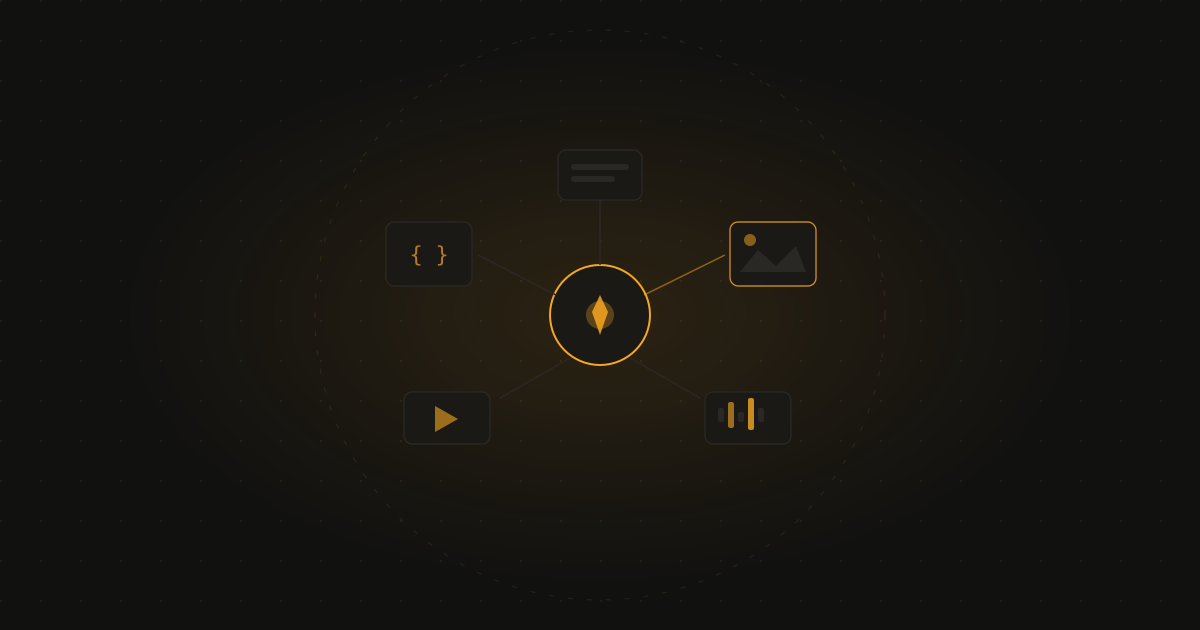
The short answer: Generative AI is AI that creates new content — text, images, audio, video, or code — instead of just analysing or sorting existing content. When ChatGPT writes you an essay, Midjourney draws you a picture, or ElevenLabs reads text aloud in a synthetic voice, that’s generative AI doing the generating.
You’ve probably heard “generative AI” used as a catch-all term for the current wave of AI tools. It’s a more specific label than it sounds — and understanding what it actually excludes is as useful as understanding what it includes.
”Generative” vs other kinds of AI
Not all AI generates anything. A spam filter is AI — it classifies emails as spam or not spam, but it doesn’t create new content. A recommendation system is AI — it predicts what you might want to watch next, but it doesn’t generate a new show for you. A fraud-detection system flags suspicious transactions; it doesn’t write you a new one.
Generative AI is the subset of AI specifically built to produce new output: a new paragraph, a new image, a new piece of music, a new block of code. The “generative” part is the defining feature — it makes something that didn’t exist before, based on patterns learned from existing examples.
What generative AI can create
Text. ChatGPT, Claude, and Gemini generate essays, emails, summaries, code, and conversational responses, one likely-next-word at a time, informed by the patterns in their training data.
Images. Midjourney, DALL-E, and Google’s image tools generate pictures from text descriptions, learning visual patterns from enormous sets of training images.
Audio. Tools like ElevenLabs generate natural-sounding speech from text, or clone a voice from a short sample — see the best AI tools for text-to-speech for more detail.
Video. Tools like Sora and Runway generate short video clips from text prompts, an extension of the same underlying idea applied to a much harder medium.
Code. Coding assistants generate working code from a description of what you want, trained on enormous volumes of existing code.
How it actually works (briefly, no math)
Generative AI models are trained on huge amounts of existing content — text, images, or audio — and learn the statistical patterns of what tends to follow what. A text model learns what words tend to follow other words in context; an image model learns what visual patterns tend to correspond to certain descriptions. When you give it a prompt, it generates new content by predicting, step by step, what should plausibly come next — not by retrieving a stored answer.
This is why generative AI can produce something genuinely novel (a sentence that’s never been written before) while still sounding coherent — it’s not copying, it’s predicting based on learned patterns.
Where you’ve probably already used it
If you’ve typed a question into ChatGPT, asked an AI tool to draft an email, generated a profile picture, or used a “rewrite this” feature in a writing app, you’ve used generative AI. It has become so embedded in everyday tools (search engines, email clients, design software) that many people use it regularly without thinking of it by that name.
The catch: it generates plausible, not necessarily true
Because generative AI is built to produce plausible-sounding output, it can generate things that sound right but aren’t. A text model can state an incorrect fact with complete confidence; an image model can draw a hand with the wrong number of fingers, or a building with physically odd architecture. This tendency — generating false information that sounds or looks credible — is what’s behind AI hallucination. It’s the main reason generative AI output is worth double-checking before you rely on it for anything important.
Generative AI vs an AI agent
It’s worth distinguishing generative AI from an AI agent. Generative AI describes the capability to create content. An agent is a system that uses that capability (often repeatedly) alongside planning and tool use to complete a multi-step task on its own. Most AI agents are built on top of generative AI models, but “generative” and “agentic” describe different things — one is about creating content, the other is about acting autonomously.
Related: What is AI hallucination? and what is an AI agent?
Frequently asked questions
What is generative AI in simple terms? Generative AI is AI that creates new content — text, images, audio, video, or code — rather than just analysing, sorting, or predicting based on existing content. ChatGPT writing an essay, Midjourney creating an image, and ElevenLabs generating speech are all examples of generative AI in action.
Is ChatGPT generative AI? Yes. ChatGPT is a generative AI tool — specifically, it’s built on a large language model that generates new text in response to your prompts, rather than retrieving pre-written answers from a database.
What’s the difference between generative AI and a chatbot? A chatbot is the interface — the conversational format you interact with. Generative AI describes the underlying capability: that the system creates new content rather than just looking things up. ChatGPT is a chatbot that uses generative AI; an AI image generator uses generative AI without being a chatbot at all.
Is generative AI always accurate? No. Generative AI is designed to produce plausible, well-formed content, not necessarily true content. Text models can state incorrect facts confidently (see AI hallucination), and image generators can produce visually convincing but factually wrong details. It’s worth verifying anything generated that actually matters.
Free newsletter
Join readers learning AI from zero
One plain-English AI tip per week. No jargon, no hype, no spam. Unsubscribe anytime.